Read your first sentences
This lesson helps your child practise reading heart words and short sentences.
How it works
- Pick a deck, then show the card on your phone to your child.
- Your child answers out loud. The grey line above the card says what to do.
- Tap Show answer to check, then tap Next.
How to play
A story to read: The hen in the hat
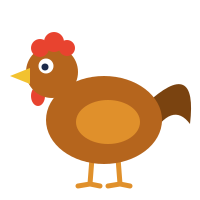
Ben has a red hat.
Ben set the hat on the bed.
Ben got a bun.
Ben ran in. A hen is in the hat!
“Get up, hen!” Ben did tap the hat.
The hen did not get up.
Ben sat on the bed. The hen sat in the hat.
Tap, tap, tap! Pop!
Ben did not get the hat.
Ben has a pet hen!
Your child reads the whole story out loud, sliding a finger under each word. Then ask: Why did Ben not get the hat back?
More helpIf your child is stuck, or you want to see questions other parents ask, expand this list.
If your child is stuck
Your child sounds out every word and forgets the start of the sentence
That is normal at first. After they finish, read the sentence back to them smoothly, then ask them to read it again. The second read is the one that builds fluency.
Your child guesses a word from the picture
There is no picture until you tap Show answer, on purpose. Keep the answer hidden until every word has been read.
Your child skips the little words
Point under each word, including the, a and is. Say that every word gets a turn.
Your child reads is as iss, or has as hass
That is the s doing its usual job. Say, In is and has, the s says z. Those are heart words. We just know them.
Questions parents ask
What is a decodable sentence?
It is a sentence made only of words the child can sound out with the letters and patterns they have been taught, plus a few words they have been shown as a whole. These sentences use the single letter sounds and the five heart words.
What is a heart word?
A common word your child reads as a whole, because one part of it does not follow the sounds yet. The th in the is taught in lesson 17, and the s in is and has says z. Rather than wait, this lesson shows the five most useful ones and says: we just know these. A few more heart words are added in each unit, and lesson 49 gathers the rest.
How long should my child spend on sentences?
Five to eight sentences is a good session. Reading sentences is tiring for a beginner. Stop while it is still fun and come back tomorrow.
Why does this matter?
Reading a sentence is more than reading three words in a row. The child has to keep going, hold the words in mind, and get the meaning at the end. Nearly every word here uses only the letters from lessons 5 to 13. The five heart words (the, a, I, is, has) are shown first and read as whole words, because the s in is and has says z and the e in the says uh.
Which words and cards are in this lesson?
Heart words (5 cards). the, a, I, is, has. Read the sentence (48 cards). The cat sat on the mat. The dog can dig. A pig is in the mud. I can hop. Sam has a red hat. The fox is in a box. Tom has a big bus. I am six. The hen can sit. Mom has a pen. A bug is on the log. I can run. The cup is on the mat. Dad has a map. The rat ran up the log. Kim has a kit. The bat can nap. The cat has a bed. The pup can dig. Jan has a big jug. Max has a wig. The cat sat in the box. Bob has a bat. Ben can hop on the log. The nut is on the mat. I can sit on the rug. The kid can sit. I am in the van. The bug is in the web. The hat is on the peg. Mom has a hot pot. Tim has a red cap. The bus is big. The pen is on the pad. I can zip it up. Get the cup. Sit on the mat. The pig can dig in the mud. The bun is in the bag. I had a nap in the bed. The fan is on. The jet is big. Pam has jam. The dog sat on the rug. Dad can fix the van. The lid is on the pot. I can hum. The yak is big. Yes or no? (24 cards). Can a dog run? Can a cup run? Is a bus big? Can a pig sit on a cup? Is the sun hot? Is mud wet? Can a fox nap? Is a hat a pet? Can a cup hop? Can a kid hop? Can a pot nap? Is a bug big? Can a rug run? Can a cat fit in a box? Is a pen a pet? Can Mom hug a kid? Can a dog yap? Can a mat hop? Is a jet big? Can a bat fit in a cup? Can a man run? Is a bed wet? Can a hen sit? Can a log hop? Review (12 cards). pen, gum, log, yum, bun, job, fig, pup, jam, mud, box, ox. A story to read: The hen in the hat: Ben has a red hat. Ben set the hat on the bed. Ben got a bun. Ben ran in. A hen is in the hat! “Get up, hen!” Ben did tap the hat. The hen did not get up. Ben sat on the bed. The hen sat in the hat. Tap, tap, tap! Pop! Ben did not get the hat. Ben has a pet hen!
How does this lesson fit the Ontario curriculum?
It supports the Ontario Language curriculum, Grade 1 (2023), overall expectation B2, Language Foundations for Reading and Writing. Specific expectations: B2.4 Using phonics knowledge to read words; B2.8 Reading fluency: accuracy, rate and expression.