Which is bigger, to 50
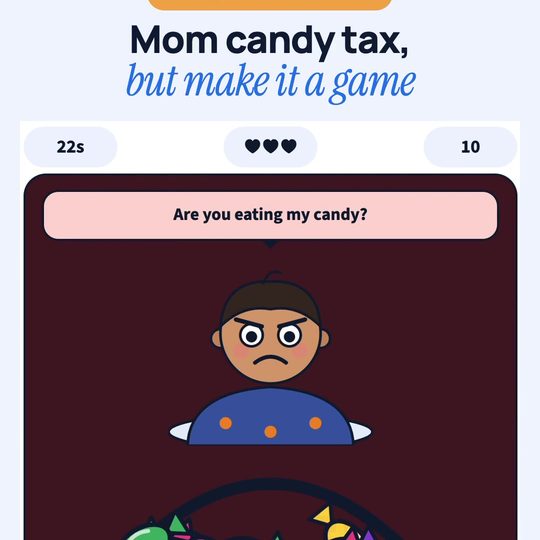
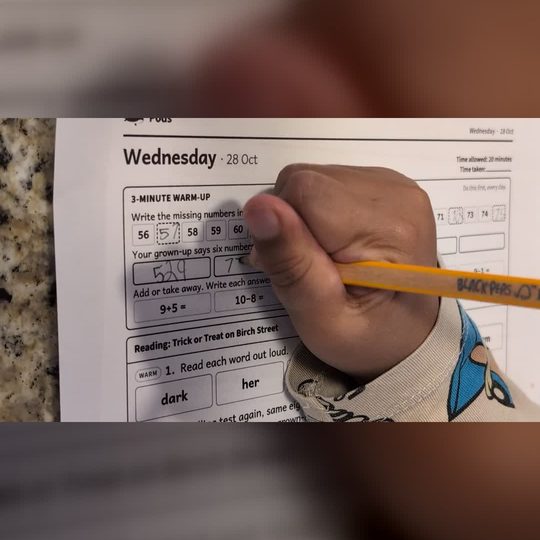
This lesson helps your child estimate a jar of things, count them in tens, and say which of two numbers to 50 is bigger.
How it works
- Read the card. Your child guesses the jar, tips it out, and counts in piles of ten.
- Compare two numbers: tens first, then ones. Tap Show answer to check, then tap Next.
- When you are done, your child colours in stop 23 on the poster and meets the fourth pod friend.
The game: The jar
Get: A jar or bowl with 30 to 50 small things.
- Open The jar. Read the card: Look at the jar. Do not count. More than 20 or fewer than 20? Your child guesses and says why.
- Say: Tip it out. Make piles of ten. Your child makes piles. Say: Count the piles by tens, then the loose ones. 10, 20, 30, 31, 32.
- Ask: Was your guess more, fewer, or about right? Then split the pile into two bowls and ask which has more, and how they know without counting.
- Open Which is more? Two numbers. Say: Look at the tens first. Tap Show answer. Then Sticks and dots, and Put them in order.
- Finish with a Why card. Then your child colours in stop 23 on the poster and meets the harbour seal below.
How to play
Done? Colour in stop 23.
The journey poster is one page for the fridge. Print it once, and your child colours in a stop after each game.
You met a new friend!
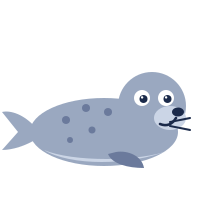
At the end of Bay 4 the pod meets a harbour seal, who can hold its breath for half an hour and likes to watch from the rocks.
Print the friend cards (one page, all eleven friends). Your child chooses a name, writes it on the card, cuts it out and sticks it over the square on the poster.
More helpIf your child is stuck, or you want to see questions other parents ask, expand this list.
If your child is stuck
Your child counts the jar by ones and loses track
Stop and say: let us make piles of ten so we do not lose count. Build one pile together, then let them build the rest.
Your child says 29 is more than 32 because 9 is big
Build both with spoons and crackers. Say: 32 has three spoons, 29 has two. Spoons first. Three tens beat two tens, whatever the crackers do.
Your child will not guess
Give two choices: more than 20 or fewer than 20? A choice is easier than a number.
Questions parents ask
Why estimate again?
Because Ontario asks for estimating collections to 50 and checking by counting, and because a guess shows whether 30 means anything to your child yet. Bay 2 guessed to 20; this is the big version.
How do I know Bay 4 is done?
Your child can build 37 with spoons and crackers, read 42 and not say twenty-four, count by tens and fives to 50, and say that 32 beats 29 because of the tens. If one of those wobbles, replay that lesson for a day.
Does my child have to touch the screen?
No. You hold the phone and tap. Your child counts, moves things, steps or shows fingers, and tells you the answer.
Why does this matter?
Comparing numbers to 50 is the last piece of Grade 1 number sense, and it only works once tens and ones are solid: 32 beats 29 because three tens beat two, however big the ones look. The jar brings estimating back in, now with piles of ten to make the count quick.
Which cards are in this lesson?
The jar (8 cards). Say: Look at the jar. Do not count. More than 20 or fewer than 20? Say: Tip the jar out. Make piles of ten. Count the piles by tens, then the loose ones. Say: Was your guess more, fewer, or about right? Say: I will put 25 in this bowl and 32 in that one. Which bowl has more? Say: Here are 18 and here are 14 in two piles. Which has fewer? Say: Put these numbers in order from smallest to biggest: 31, 13, 23. Say: Is 29 closer to 20 or to 30? Say: Grab a handful of crackers. Guess, then count in tens. Which is more? (10 cards). 30 is more. 43 is more. 32 is more. 51 is more. 27 is more. 21 is more. 50 is more. 36 is more. 41 is more. 21 is more. Sticks and dots (6 cards). 38 is more. 31 is more. 42 is more. 30 is more. 21 is more. 14 is more. Put them in order (7 cards). Which is the biggest: 24, 42, 14? Which is the smallest: 31, 13, 33? Put them in order, smallest first: 20, 12, 25. Which comes first? Which is more: 29 or 30? Which is less: 45 or 41? Is 50 more than 49? Why (3 cards). Why do we look at the tens first when comparing? How does making piles of ten help you count a jar? Your guess was 20 and the count was 34. Was that a bad guess?
How does this lesson fit the Ontario curriculum?
It supports the Ontario Mathematics curriculum, Grade 1 (2020). Specific expectations: B1.3 Compare and order whole numbers up to 50; B1.4 Estimate collections of up to 50 and check by counting.