or and ore, as in fork and store
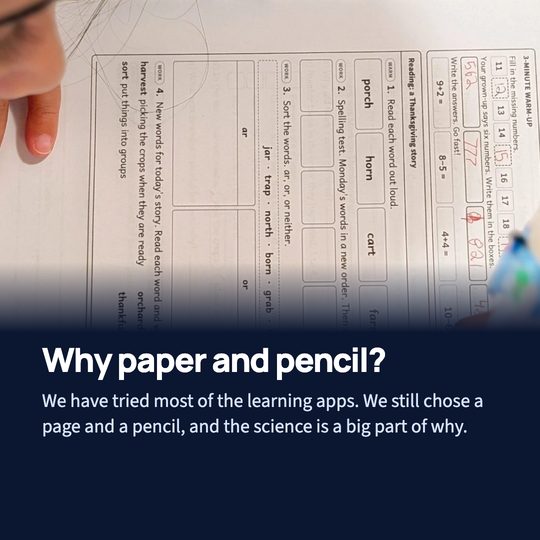
This lesson helps your child practise reading and spelling words with or and ore.
Ontario lists this pattern for Grade 1, and many children read it with ease only in Grade 2. See Is this Grade 1 or Grade 2? on the Phonics Made Easy page.
How it works
- Pick a deck, then show the card on your phone to your child.
- Your child answers out loud. For Spell it out loud, they say the letter for each box.
- Tap Show answer to check, then tap Next.
How to play
More helpIf your child is stuck, or you want to see questions other parents ask, expand this list.
If your child is stuck
Your child reads store with a long o, like stow
That is the silent e rule working, which is a good sign. Say, The r is bossier than the e. When r is there, the e gives up, and the sound is or.
Your child reads for as f, o, r with a short o
Cover the word and show only or. Say, These two are a team that says or. Then uncover and blend.
Your child mixes up ar and or
Say car and corn. Ask them to look at which vowel sits before the r. The a makes ar, the o makes or. Use the two picture words.
Questions parents ask
Why do more and store end with a silent e?
At the end of a word, or is often spelled ore, as in more and store. Short words like for and or do not need the e. The e is silent and does not change the sound, which is still or. A child who knows silent e needs to be told that r wins.
Are for and or sight words?
They are fully decodable once the or team is taught, which is why they are read here rather than shown as heart words. Both are among the most common words in English.
Why does this matter?
The or team is in some of the most useful words a child reads: for, or, more, short, horse. It also brings in the first words where a silent e sits after a bossy r (store, more), which looks like silent e but does not change the sound. Pointing that out stops children from trying to make the o say its name.
Which words and cards are in this lesson?
Dog or fork? (40 cards). dog: hot, pot, fox, sock, shot, cob, spot, stock, cod, top, hop, mop, box, lock, dot, doll, log, frog, clock. fork: cord, port, fork, sort, short, cork, sport, stork, corn, torn, horn, more, born, torch, door, storm, store, horse, fort, porch, shore. The teams (4 cards). The letters or, ore, in capital and small. Read the word (34 cards). fork, corn, horn, born, torn, worn, cord, cork, pork, port, sort, fort, short, sport, storm, stork, north, form, horse, torch, porch, or, for, nor, more, core, sore, tore, wore, shore, snore, score, store, chore. Spell it out loud (30 cards). fork, corn, horn, born, torn, cord, cork, pork, port, sort, fort, short, sport, storm, stork, north, form, horse, or, for, more, core, sore, tore, wore, shore, snore, score, store, chore. Read the sentence (20 cards). The fork is for the corn. The horse is in the barn. A storm is on the way. The stork has a long beak. Blow the horn! The store is shut. I tore my sock. Mom sat on the porch. The cork is in the jar. The fort is on the hill. Is this for Dad? The shore is past the farm. Dad has more corn. The pig can snore. Short or tall, Dad is the best. The storm tore the tent. Can a horse run? Is a fork sharp? Can a stork sort socks? Is corn a sport? Review (12 cards). feet, flew, food, noon, scar, roof, toad, sky, goal, moon, arch, scoop.
How does this lesson fit the Ontario curriculum?
It supports the Ontario Language curriculum, Grade 1 (2023), overall expectation B2, Language Foundations for Reading and Writing. Specific expectations: B2.3 Grapheme-phoneme correspondence: r-controlled vowels.