You did it! What your child can do now
The pod has reached the end of the coast. Every stop is coloured in and every friend has a name. Here is what your child can do now, and what to do next.
What your child can do now
Your child counts, reads and compares numbers to 50, knows the adding and taking away facts to 10 and three ways to work in their head to 20, shares fairly, finds pattern rules, reads a tally and a graph, names flat and solid shapes, measures by comparing, reads a calendar and knows the Canadian coins.
- Count out any number to 10 one at a time, see 1 to 5 without counting, and say what comes before, after and between.
- See 6 to 10 as five and some more, know what goes with any number to make 10, and break a number into two parts.
- Add and take away to 10 with objects and say the sentence with plus, minus and equals; say all four facts in a family.
- Read, build and compare numbers to 50 as tens and ones; count by 1s, 2s, 5s and 10s to 50.
- Add 10, use doubles and near doubles, make a ten to add, and count up or go through ten to take away, all in their head to 20.
- Add and take away to 50 when the tens or the ones change, and check with the opposite.
- Make equal groups, share fairly between 2 and 4, name a half and a fourth, and say why a half is bigger.
- Copy, carry on and make patterns, say the rule, find the missing piece, and read the equals sign as a balance.
- Sort by one rule, tally in fives, make a graph from socks and read it, and use impossible, possible and certain.
- Name flat and solid shapes, fold for matching halves, say where things are, and walk a robot code.
- Compare length, weight, what holds more and what covers more; read the calendar; name the Canadian coins and pay to 25 cents.
Your pod
One new friend waits at the end of every bay. Your child names each one and adds it to the fridge; the names stay in your kitchen, not on this website. The friend cards are one page to print.
 Bay 1: an orca calfCount to 10. Met at lesson 5, More, fewer, the same.
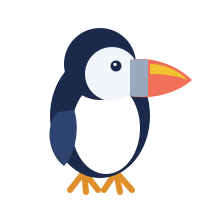 Bay 2: a puffinNumbers inside numbers. Met at lesson 10, Estimate, then count.
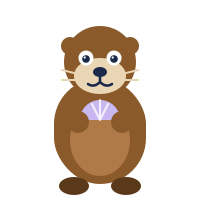 Bay 3: a sea otterAdding and taking away to 10. Met at lesson 16, Number stories to 10.
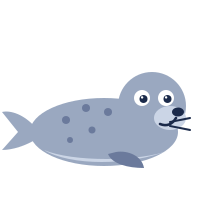 Bay 4: a harbour sealTeen numbers and numbers to 50. Met at lesson 23, Which is bigger, to 50.
 Bay 5: a starfishMaths in your head to 20. Met at lesson 28, Take away to 10.
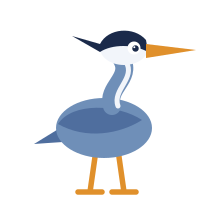 Bay 6: a great blue heronAdding and taking away to 50. Met at lesson 30, Number stories to 50.
 Bay 7: a crabSharing and equal groups. Met at lesson 34, Which share is bigger?.
 Bay 8: a moon jellyfishPatterns and the equals sign. Met at lesson 38, Same or not the same?.
 Bay 9: a sea lionSorting, graphs and chance. Met at lesson 42, Impossible, possible, certain.
 Bay 10: a salmonShapes and where things are. Met at lesson 47, Give the robot its code.
 Bay 11: a humpback whaleMeasuring, the calendar and money. Met at lesson 51, Canadian coins.
What to do next
- Keep playing. Any lesson's game works again a month later, and the Why cards get better answers every time.
- Use the maths in the house: set the table in equal groups, count the change at the shop, read the fridge calendar every morning.
- Replay a bay. The last lesson of every bay has a question called How do I know this bay is done; use it to pick.
- Carry on with the weekly Orca Pods pack for Grade 1, which goes to 100 and adds the pencil work.
- Print a fresh poster for a younger brother or sister. The pod is happy to swim the coast again.
Questions parents ask
What comes after Maths Made Easy?
The weekly pack, every week, with numbers to 100 and the pencil work. And real life: coins, calendars, sharing, measuring. The games here can be played again any time.
Is my child ready for Grade 2?
Everything in Ontario's Grade 1 mathematics curriculum that a parent can teach at a kitchen table is on this page. Grade 2 adds numbers to 200, adding across tens, and centimetres. The foundation is here.
Can we start again from stop 1?
Yes. Print a new poster and swim the coast again. The second time is faster, and the Why cards sound very different a year later.
Why does this matter?
A finish line matters. A poster with 51 coloured stops and eleven named friends is proof your child can hold in their hands. Everything on this page is something they could not do at stop 1.
Which cards are in this lesson?
This page has no flash cards.
How does this lesson fit the Ontario curriculum?
It supports the Ontario Mathematics curriculum, Grade 1 (2020). Specific expectations: B1.1 Numbers to 50; B2.2 Addition facts to 10 and related subtraction facts; B2.3 Mental maths to 20; C1.3 Pattern rules; D1.5 Reading data; E1.1 Shapes; E2.3 The calendar; F1.1 Canadian coins.








