Halloween traditions that bring you closer to your kid (and help them grow)
In short. The best Halloween activities for young kids are the ones you do every year, because the repetition is what makes them feel like yours. Six Halloweens in, these are the nine that stuck at our house. Plan the costume a month out, a family pumpkin-carving night, decorate the house together, a backyard bonfire with s'mores and scary stories, one signature Halloween treat to share, trick-or-treat together, the great candy sort, a Halloween kindness tradition, and a Halloween time capsule video with the same five questions every year.
Our daughter was a couple of months old on her first Halloween, in October 2020, and nobody knew what Halloween was going to look like that year with the COVID quarantines in place. She obviously wasn't going anywhere. So we did the only thing we could think of. We packed small treat bags with candy, stickers, a little toy and the kind of knick-knacks kids love, set up a big table outside the house, and put a label on every bag that said Quaran-treat yourself. We made about fifty, because with the COVID rules still on we had no idea whether anyone would come. It was the only year we didn't stand on our porch waiting for the neighbourhood kids to arrive.
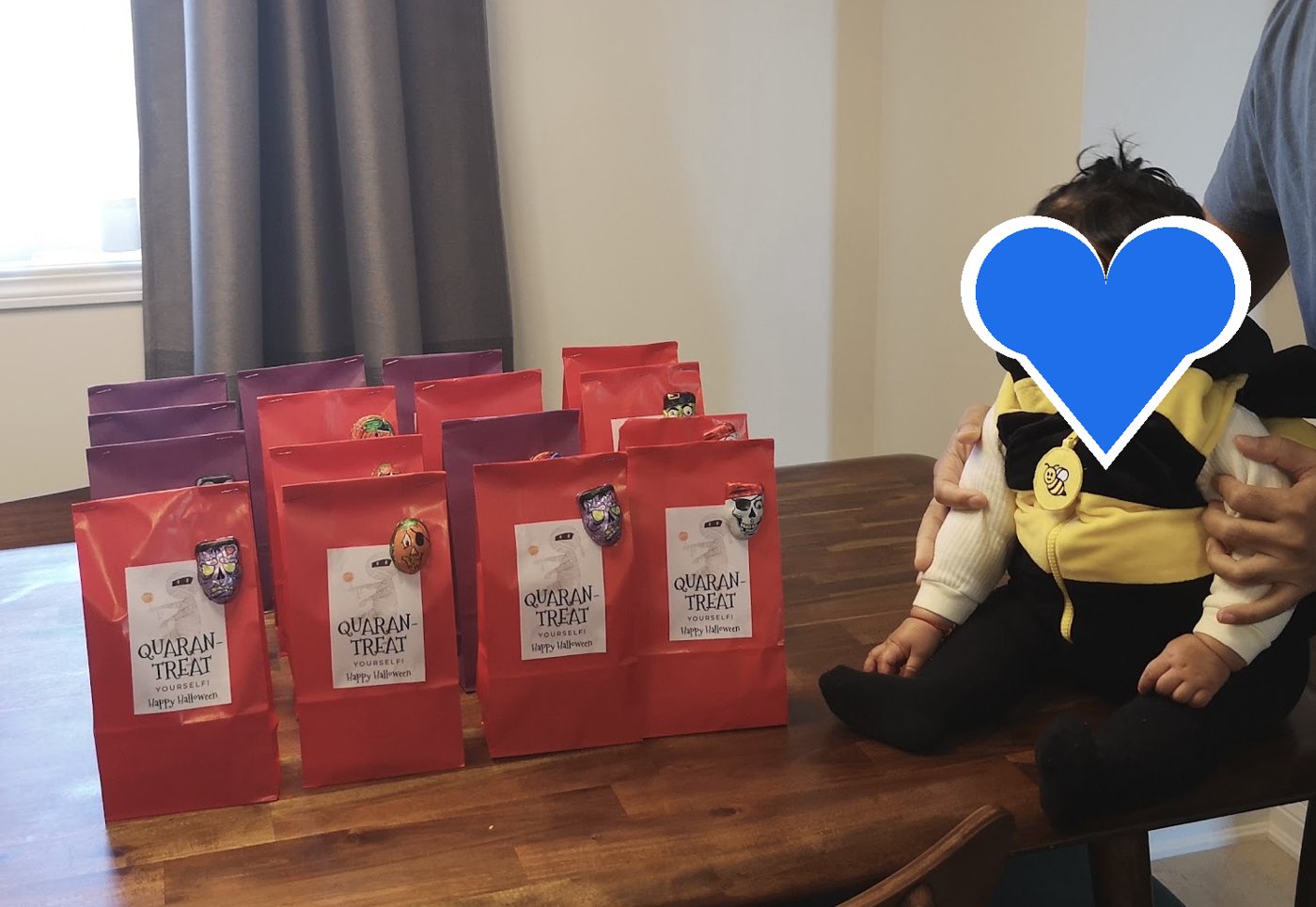
They were gone in 20 minutes. Then we had to turn the porch light off and watch kids walk past, which I still feel bad about. The lesson from year one was simple: buy way more treat bags and candy for next year!
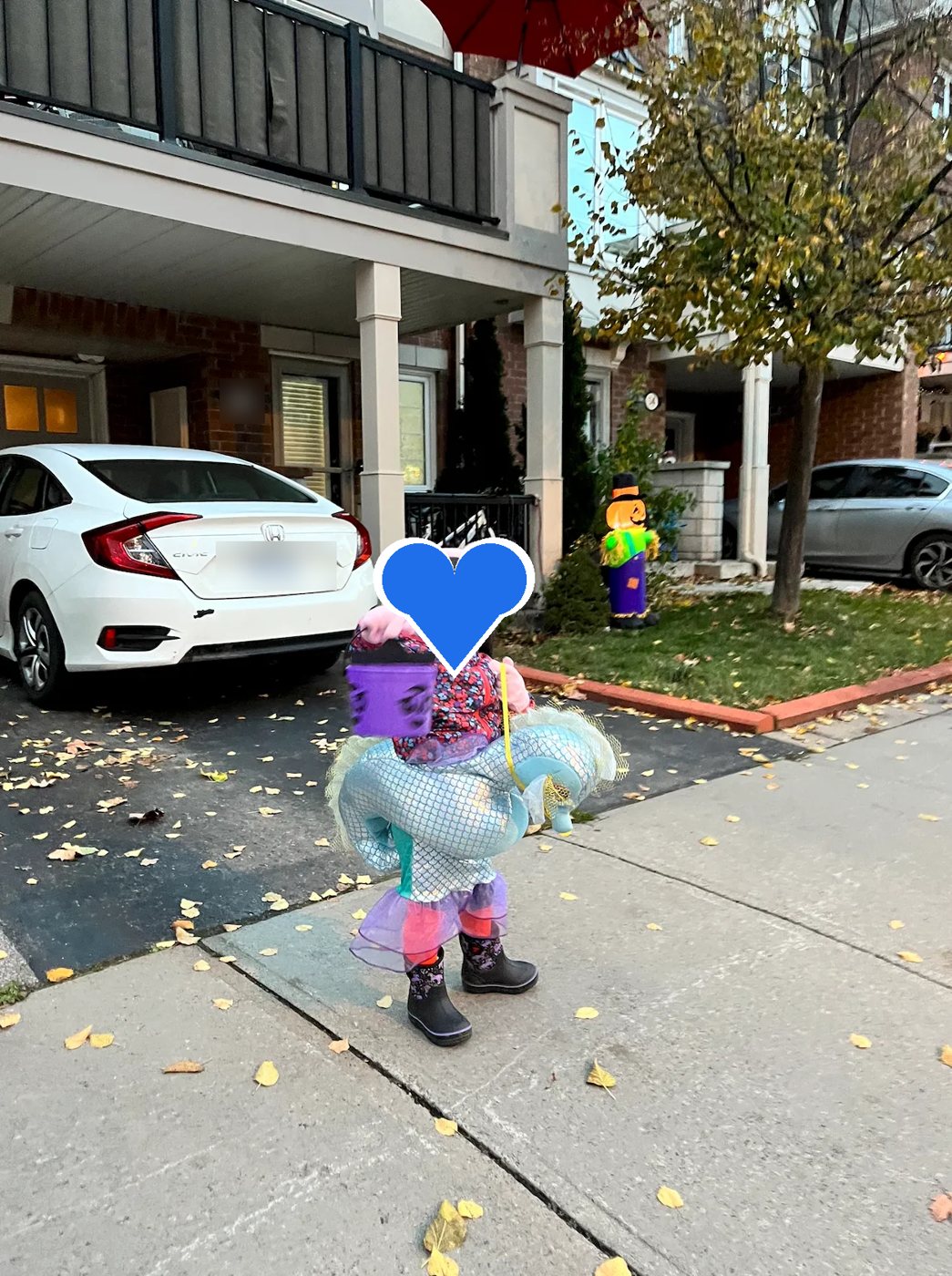
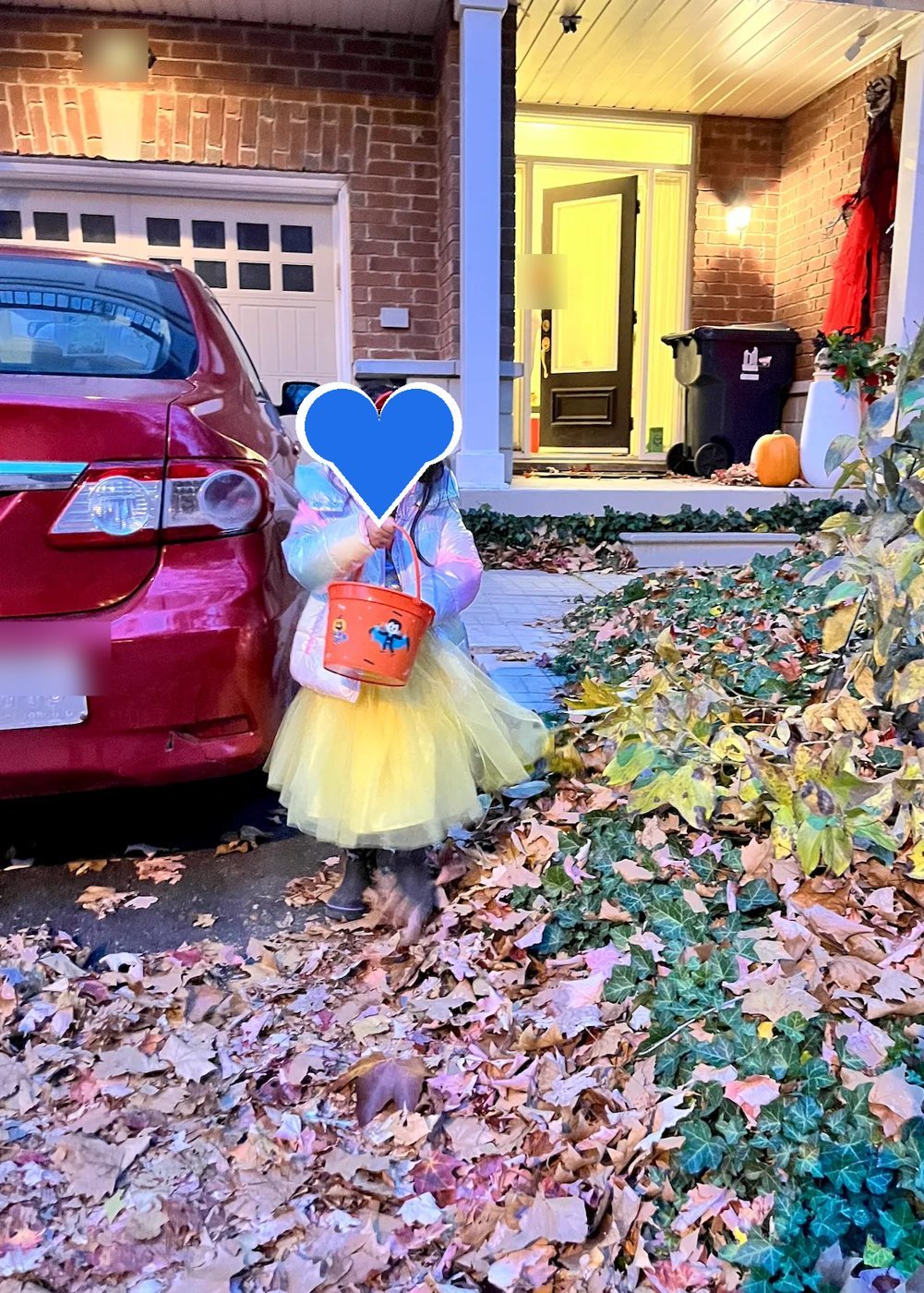
I have no photos from 2022, because she wasn't well that year and we only gave out treats to the kids who came to the door. In 2023 she went door to door for the first time. She was three, and she could not have been more excited about it. It was a chilly day, so our little seahorse needed boots and a jacket, and was still cold. She called it quits after an hour, once her bucket was full, and was more interested in handing treats to the kids who came to our house than in getting more herself.
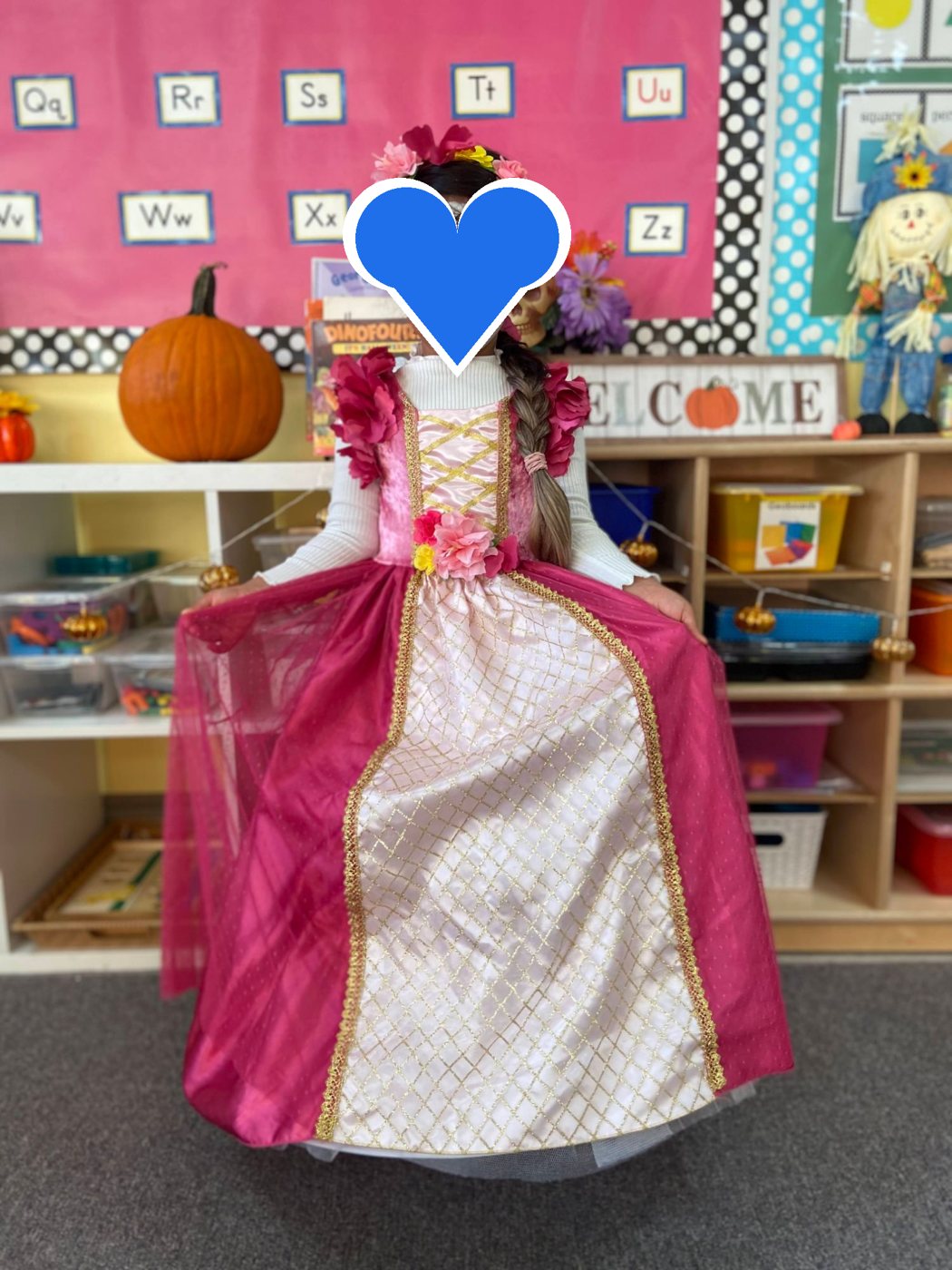
2024 was the big one. She had started JK that September and her first school Halloween parade was coming. She wanted to be scary Rapunzel, which meant the prettiest dress we could find and half her face painted as a skull. She loved it, she was so happy walking in that parade, and watching her do it was one of those moments that stays with you as a parent. The school parade has been the thing we plan hardest for ever since.
That year came with a twist. Halloween and Diwali fell on the same day, and we celebrate both. So after school she changed into a second costume, the only year we have ever done two, and went trick-or-treating with her dad while I did the door for the kids coming to ours. Her grandparents were with us and did the pujas, and we joined them for the big one. It was a long, happy and tiring evening. We wanted her to have both, and she did.
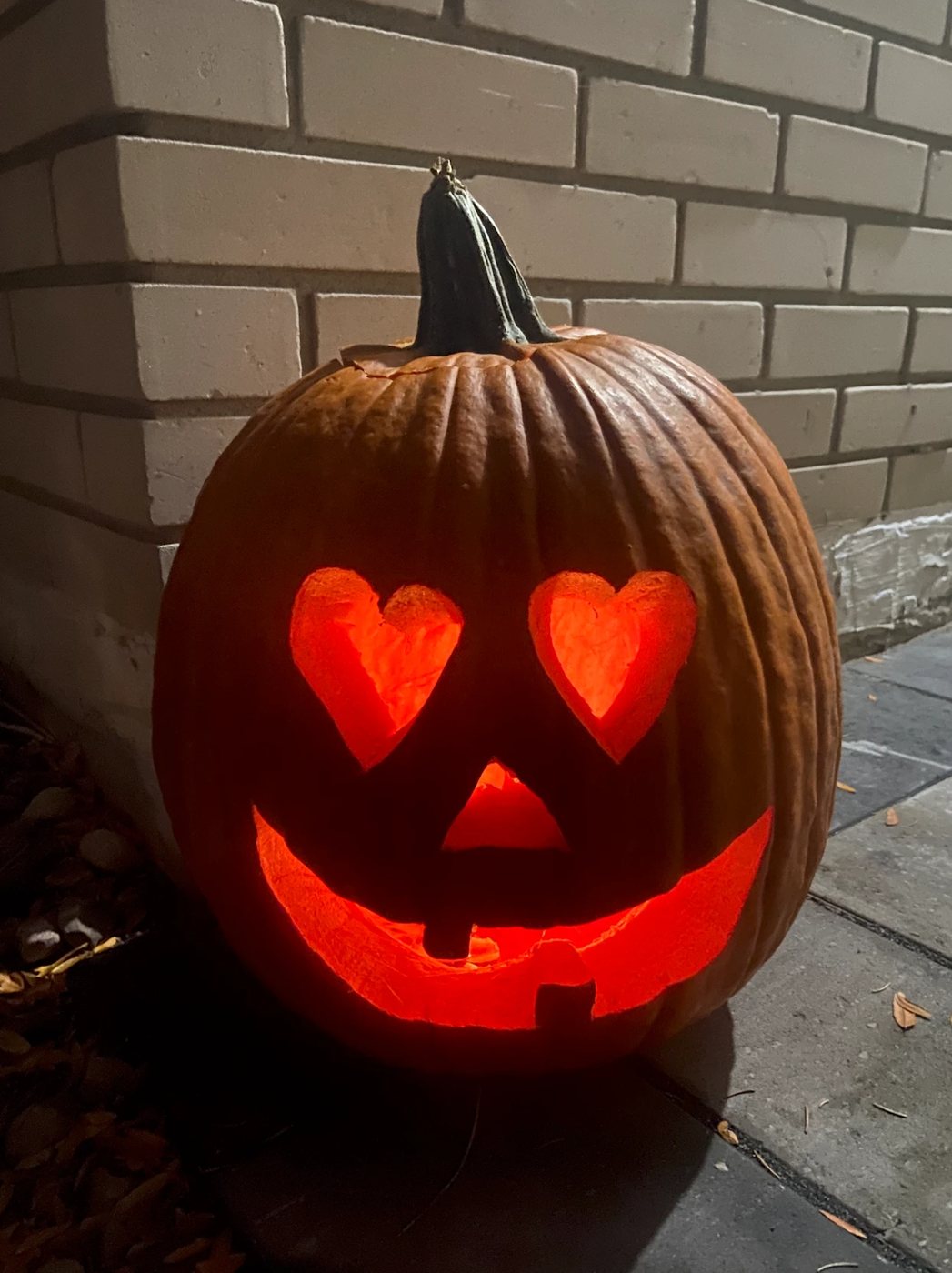
2024 was also our first pumpkin. She had just turned four. She chose the face, hearts for eyes, and that was it. We have carved one together every year since.
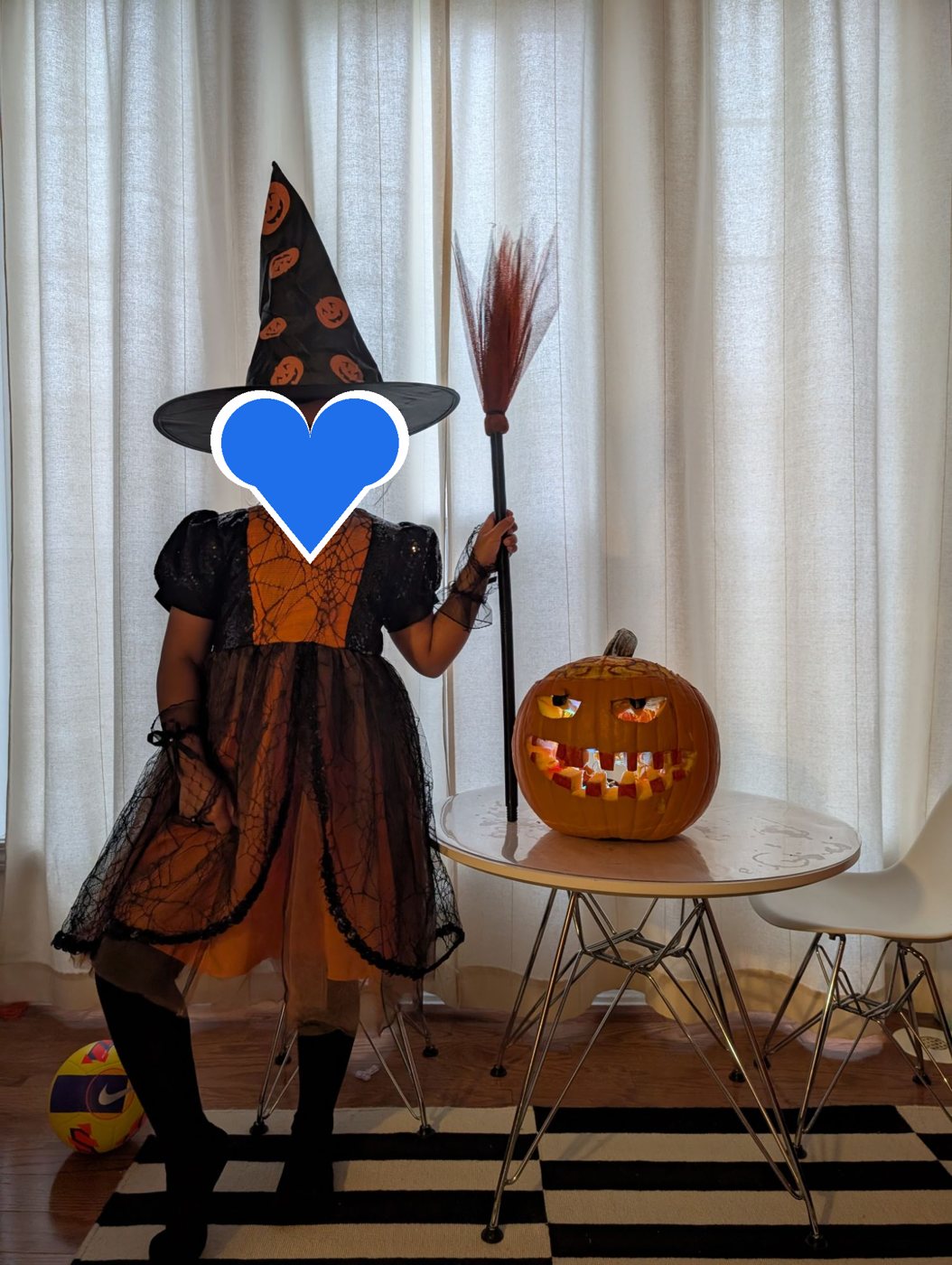
By 2025 she was running the show. The witch was planned about a month out: the dress, the hat, how she wanted her face done, which props. The pumpkin was planned too. A month of deciding together turns out to be most of the fun, and it is the part she remembers.
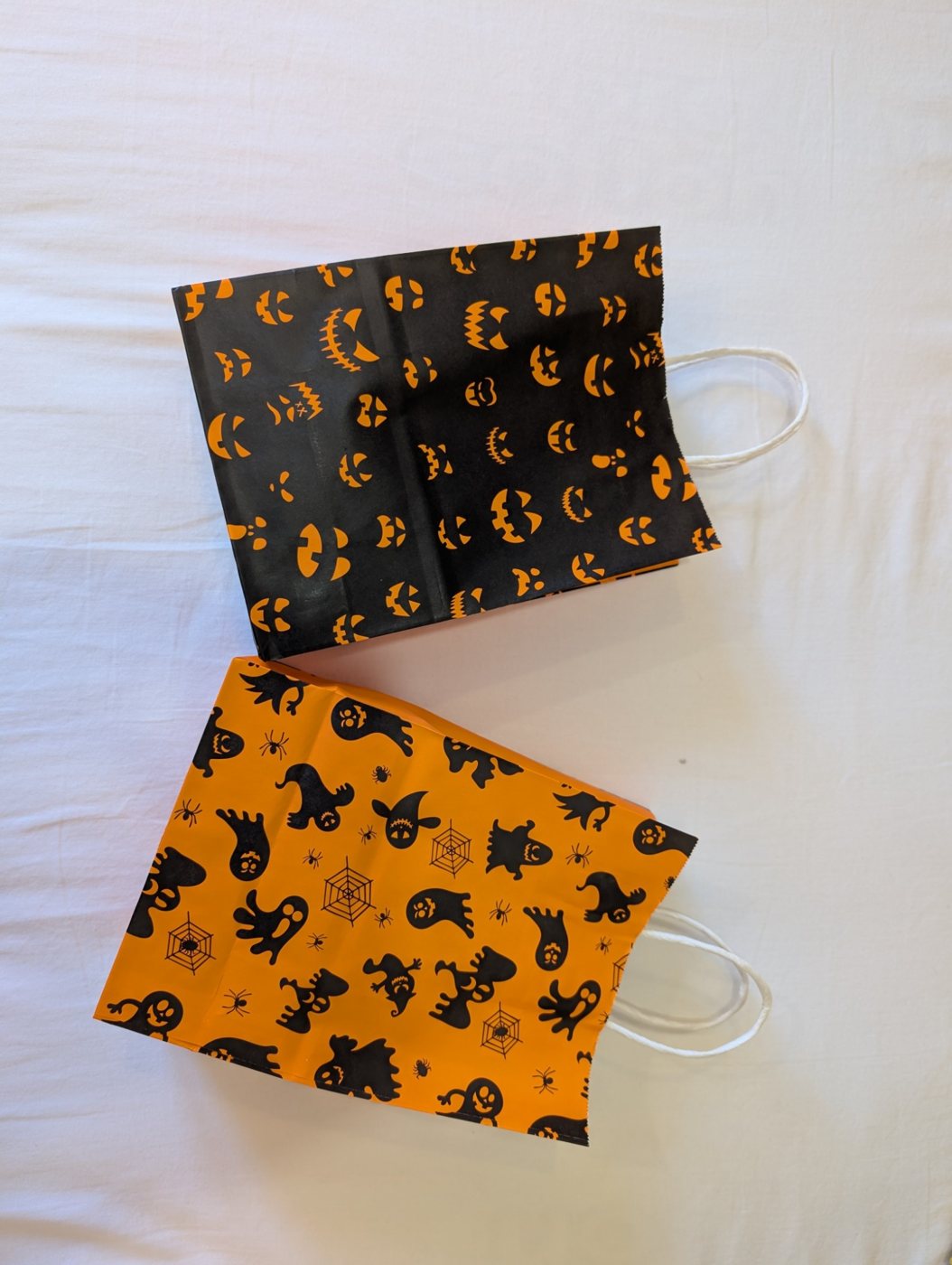
The other thing that started when she joined school is the treat bags. Every year since 2024 we have packed one for each kid in her class, and we change what goes in. This year it is fidget toys, stickers, tattoos and candy.
This year she is going as a creeper. Minecraft has had a say in our house for a year now, which I try to limit, though I did let her buy the Lego sets, so I have only myself to blame. The costume is a Costco find at a good discount and the trial run has already happened.
Looking back over six Halloweens, the things that stuck are the ones that gave her a job to do. That matches what the research on family rituals has said for decades. A review of fifty years of studies on family routines and rituals found that the rituals a family repeats are linked to how well children adjust and how the family feels about itself. A ritual tells a child who we are.
So here are the nine we keep coming back to.
1. Plan the costume together
This starts at least a month before Halloween, so if anything needs making, you have time. What they want to be, how their face should look, which props, and what goes underneath because it will be cold. The planning is the part they remember, and a decision made a month ago is a decision they stick to on the night.
What it builds: planning a job in steps, making a choice and holding to it.
2. Family pumpkin-carving night
Pick a night, put newspaper on the table, and carve one together. They choose the face, you do the knife, they scoop. Ours started in 2024 with heart eyes and it has been the first thing on the list every year since. The pumpkin goes on the step the same night, and they get to light it.
What it builds: a job they own every year, and the pride of seeing their creation on the porch.
3. Decorate the house together
Spider webs on the railing, a ghost in the window, the bats on the door. Let them decide where things go, even when it is not where you wanted to put them. Let them see that their decisions matter. Walk to the end of the driveway together afterwards and look back at it. Take pictures and make the memories!
What it builds: a say in how the house looks, and pride in it when the neighbours walk past.
4. The bonfire and stories in the backyard
One evening in the last week of October, light the fire pit, do s'mores, and have a few families over to share scary stories. Kids this age want to be scared just a little, with a grown-up right there, and a story told round a fire is exactly that. Let the kids tell one too.
What it builds: telling a story out loud to a group, which is harder than it sounds at six, and the public speaking and creativity that come with it.
5. Make one signature Halloween treat every year
Something new each year, made together, and then shared with the neighbours and friends. Mummy hot dogs, ghost cupcakes, a monster bark, whatever they vote for. The making is the fun part. The handing out is the part that makes it a tradition.
What it builds: strategy, planning and execution, all key life skills.
6. Trick-or-treat together
Go with them, not behind them. Let them ring the bell, say the words, and say thank you. Pick the streets together before you go, and agree the time you will head home. In our house that walk, cold hands and all, is the whole point of the night.
What it builds: a little bravery at each door, manners that get practised twenty times in an hour, and a memory you share.
7. The Great Candy Sort
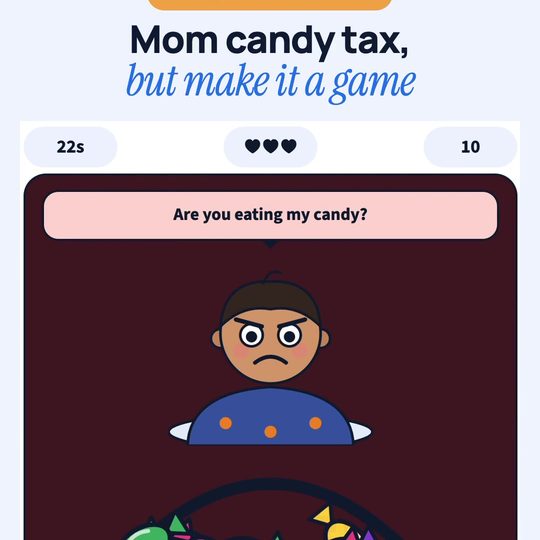
Tip the bag out on the table the same night. Sort it into piles, and let your child choose how: chocolate, chewy, lollipops, favourites. Then agree the rule together: how many a day, and who holds the bag. A six-year-old who helped make the rule keeps it. If you want a page for it, this week's pack has one.
Get this week's pack
Week 6: Kind Words, Kind Hands. Two pages a school day, the punchcard and the handbook, in one free download.
Download the free packWhat it builds: sorting and counting without it feeling like work, and a rule they made and can live with.
8. A Halloween kindness tradition
Pick one kind thing to do every Halloween and keep it. Pack a bag for a kid who was sick on the night. Leave a treat for the neighbour who always decorates. Give ten pieces of the good candy to someone else. Let your child choose who, and let them hand it over.
What it builds: kindness as something you do naturally.
9. The Halloween time capsule
Every year on Halloween, in costume, record a short video and ask the same five questions:
- What are you dressing up as?
- What's your favourite candy?
- What are you scared of right now?
- What's your favourite thing to do with our family?
- What do you want to be when you grow up?
Watch last year's back together before you record the new one. It takes two minutes, and in ten years it will be the thing you are most glad you did.
What it builds: a record of who they were at six, in their own words.
The traditions you keep are the ones your kids will keep. Pick three this year, and do them again next year.
Questions parents ask
Is six too young to go trick-or-treating?
No, as long as a grown-up goes with them. Canadian safety groups say an adult should go along until about age ten, stick to houses with the porch light on, and keep the costume short enough to walk in. Two or three blocks is plenty for a six-year-old. The bag gets heavy fast.
What time does trick-or-treating start in Toronto?
There is no official time. Most families head out at dusk, and on 31 October the sun sets in Toronto at about six, so by half past six it is properly dark. Most porch lights are off by eight. The clocks go back the next morning, Sunday 1 November, which is a nice thing to explain over the candy.
How do we handle the candy without a fight?
Sort it together the same night and agree the daily number before anyone eats anything. Then you hold the bag. A six-year-old who helped make the rule keeps the rule far better than one who was handed it.
My child is scared of the decorations. What do I do?
Walk past them in daylight first, a few days before, and name what each one is: a pretend skeleton, a plastic spider, a sheet on a string. Naming it takes most of the fear out. On the night, let them choose which houses to skip.
Do parents need a costume?
No, but the kids love it when you do. At our house my six-year-old settled her own costume in June, so what was left to decide was what mom and dad would wear, and we put that to a family vote with secret ballots.