How to explain elections and voting to a six-year-old in five minutes
In short. Toronto votes on Monday 26 October 2026, and kids notice the signs long before we explain them. The five-minute version that worked for my six-year-old starts at recess. Four friends want four different games, so everyone picks one, you count, and the game with the most hands is the one you play. That's a vote, and everyone gets one each. Picking one kid to be the games monitor for the whole year, the fair one who makes sure everyone gets a turn, is what grown-ups are doing on Monday when they choose a mayor, a councillor for our part of the city, and a school trustee. We don't tell people who we voted for, so nobody feels pushed. Then run a vote at home on something real, with ballots and tally marks, so your child sees the whole thing happen in five minutes, and on Tuesday morning explain the results the same way.
Toronto votes on Monday 26 October 2026, and my six-year-old has been asking about it for weeks. The signs went up around our community centre first, then outside her school, and then she found out that one of the older kids at school has a mom running, and the questions really started. Why are there so many signs? Why can't you be someone people vote for? Why does my friend's mom get to be one? Is it because she's pretty?
It's not that I don't know the answer. I majored in political science, I follow this stuff closely, and I could talk about city politics for longer than anyone at our dinner table would like. What I didn't know was how to say it so a six-year-old gets it, especially when the question on the table is whether you get to run the city for being pretty. So I worked out a version that stays inside her world, and it took five minutes at our kitchen table. Here it is, with the questions she asked back and the vote we ran at home so she could see the whole thing happen.
The five-minute version
You can say this almost word for word. It all runs on one example, recess, because that's where she already votes without knowing the word.
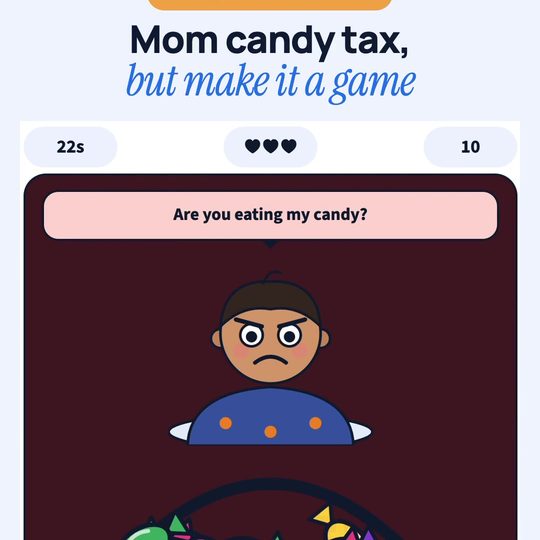
Start at recess. Imagine four of your friends each want to play a different game. One wants tag, one wants hide and seek, one wants soccer and one wants the climbing frame. You can't play all four, and if you argue about it the bell will go before you've played anything. So how do you decide? Everyone says which game they want, you count, and the game most people want is the one you play. That's a vote.
Everyone gets one vote each. The biggest kid doesn't get two, the loudest kid doesn't get two, and the kid who brought the ball doesn't get two. One each, and you count them all the same. It works exactly the same with grown-ups. The mayor gets one, I get one, your teacher gets one.
Now imagine picking a games monitor. Instead of voting on one game, your friends pick one kid to be in charge of recess for the whole year. That kid decides which game when, makes sure everyone gets a turn, and sorts out the arguments so recess is fair for everybody. You'd want someone who listens and plays fair, because they'll be deciding for the kids who voted for someone else too. Everyone votes, the kid with the most votes gets the job, and if they do it badly, next year you pick someone else.
That's what the grown-ups are doing on Monday. On Monday 26 October 2026, grown-ups all over Toronto go to a voting place, get a piece of paper with names on it, and mark the people they want. We're choosing three. The mayor, who is the games monitor for the whole city. A councillor, who does the same job for our part of the city. And a school trustee, who does it for the schools. Those three are what's on the ballot. The people with the most votes get the job for four years, and they decide the things you use every day, like the park, the library, whether the road gets fixed and how your school is run.
The signs are people asking to be picked. The people who want the job have to tell everyone they exist, so they put their name on a lawn sign and knock on doors, the way you'd say "pick me" at recess. It's a lot like the posters kids put up on the school walls asking to be class monitor. Arguing about who would be best is allowed, and grown-ups argue about it a lot because they care. Being mean about it isn't allowed.
We don't tell people who we voted for. Your vote is private, so nobody can push you, and mine is private too. You can ask me what I care about and I'll tell you.
Kids don't vote yet, and that's fair. You need to be 18. But you get to practise, starting tonight.
What she asked, and what I said
The script is the easy part. The questions are where it gets interesting, so here are hers.
- "Why are there so many signs?" Because 53 people want to be mayor and a lot more want to be councillor, and a sign on a lawn is the cheapest way to tell the whole street you exist. Each sign is one person saying "pick me."
- "Why can't you be someone people vote for?" I could. Any grown-up who is allowed to vote here can put their name forward, and this year hundreds did.
- "Why does my friend's mom get to be one?" Because she put her name on the list, and that's all it takes to start. The hard part comes after, when she has to persuade enough people that she'd be the fair one.
- "Is it because she's pretty?" No, and I got that one too. Nobody gets the job for being pretty, or tall, or having the biggest sign. They get it because the most people believe they'll be fair and do a good job, which is why you listen to what someone says they'll do and ignore what they look like.
- "Who are you voting for?" My vote is private, and so is yours when you're old enough. I'll tell you what I care about instead: a safe street to bike on and a library that's open.
- "What if the one you like loses?" Then more people wanted the other one, and the other one wins, the same as when your game loses at recess. You still play, because that's a fair majority win, and in four years we vote again.
- "Can a kid be mayor?" Not yet. You have to be a grown-up. But the mayor was once six and asked a lot of questions too.
Run a vote at home tonight
This is the part that made it click for her.
- Pick something real to decide. Dinner on Friday, the movie for movie night, what mom and dad wear for Halloween. Ours is Halloween costumes for mom and dad. She decided to be a creeper four months ago, so that one was never up for a vote.
- Make the ballots. Three or four options on a sheet, one box each. Cut a slot in a cereal box. That's your ballot box.
- Everyone votes in private. Even the kids. Especially the kids. Fold it, post it, no peeking.
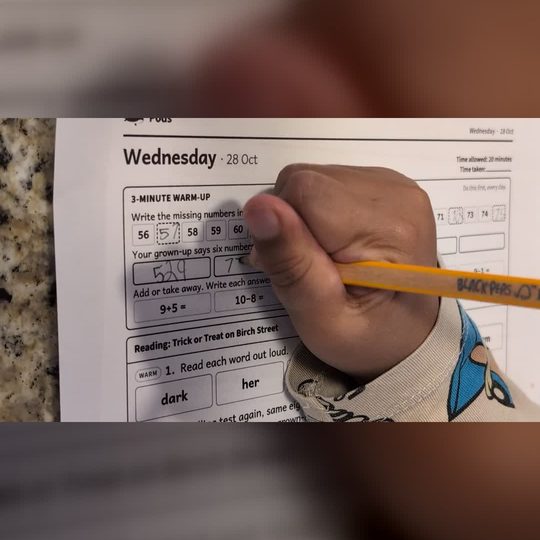
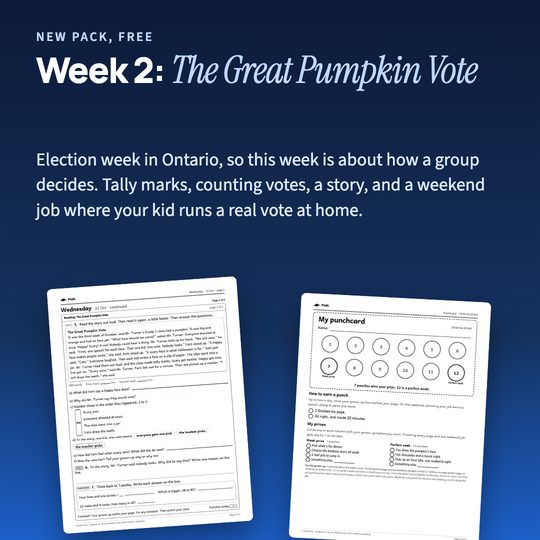
- Count out loud with tally marks. Four lines and a gate for five. This is the same tally practice as the worksheet pack for this week, and she won't notice she's doing math.
- Announce the winner, and do the thing. If her choice loses, that's the lesson, and it lands better over a dinner she didn't pick than over anything you could say.
Get this week's pack
Week 6: Kind Words, Kind Hands. Two pages a school day, the punchcard and the handbook, in one free download.
Download the free packTake her with you on Monday
If you can, bring her to the voting place. Toronto Elections doesn't publish a rule about children either way, but it ran Kids Vote Weekend inside all 50 advance voting places on 10 and 11 October, with kids under 18 casting a ballot of their own for the city's Tree of the Year, so a child beside a parent is nothing new to the people at the door. If you want to be sure about your voting place, call 311 before you go. Once you're there, show her the list of names, the little screen you mark your ballot behind, and the machine the official feeds it into that counts it on the spot. Then ask her to turn around while you mark it, so she understands that the vote is still private. Then on the way home, ask her who she'd have picked and why.
Tuesday morning: explaining the results
Unofficial results go up on toronto.ca/election-results after the voting places close at 8 p.m., so by breakfast you'll know who won, and this is the part most of us skip. Go back to recess. The games monitor has been picked. Not everyone wanted them, and that's normal, because in a vote somebody always wanted the other one. Now they get the job for four years, which for her means until she's ten, and their job is to be fair to everyone, including the kids who voted for someone else. If the person we liked lost, we say so plainly, and then we say the other thing that's true, which is that we get to watch how they do and pick again next time.
Almost nothing changes right away. The new mayor, councillors and trustees start in the middle of November, and then the deciding begins, about the park, the library, the roads and her school. Next time she sees the mayor on the news, she can say we picked them, and she'll be right.
By Tuesday she'll know what the signs were for, that her mom's vote was private, that nobody wins for being pretty, that the grown-up who got the most votes is in charge of the park, and that losing a vote is survivable. That's more than most of us knew at six.
Questions parents ask
Is six too young for this?
No. Six-year-olds already run votes without the word: who goes first, which game, what to name the cat. Naming it and showing them the real one is the whole lesson. Ontario's Grade 1 social studies curriculum covers roles and responsibilities in the community and how local services like parks and libraries serve people, which is exactly what a municipal election is about.
What do I say when she asks who I voted for?
"My vote is private, and so is yours when you're old enough. That's one of the rules, so that nobody can push anyone." Then tell her what you care about instead: safe streets, a good library, a nice park. Kids accept the rule faster than the reason, and the reason sinks in over years.
Can I bring my child to the voting place?
Toronto Elections doesn't publish a rule about children either way, so I looked at what it actually does. On 10 and 11 October it ran Kids Vote Weekend inside all 50 advance voting places, where kids under 18 came in with their grown-ups and cast a ballot of their own for Toronto's Tree of the Year, so the people at the door are well used to a child beside a parent. On Monday, keep her with you while you check in and hand over your ballot, and if you want to be certain about your particular voting place, call 311 before you go. Voting places are open from 10 a.m. to 8 p.m.
What's a school trustee?
The person we elect to speak for our part of the city on the school board, which runs the public schools. If your child is in a public school, the trustee is the one who votes on things that reach her classroom. The simplest explanation for a six-year-old: "the grown-up we pick to look after the schools."
When do we find out who won?
Unofficial results go up on toronto.ca/election-results after voting places close at 8 p.m. on Monday, so by breakfast on Tuesday you'll know. The winners start their jobs in the middle of November and keep them for four years.
What if the person we liked loses?
Say it plainly: more people wanted the other one, so the other one won, and in four years we get to vote again. Losing a fair vote and being okay about it is the most useful part of the whole lesson, and the kitchen-table vote is the place to practise it.